The Reality of Survivorship: What Patients Face When Cancer Treatment Ends
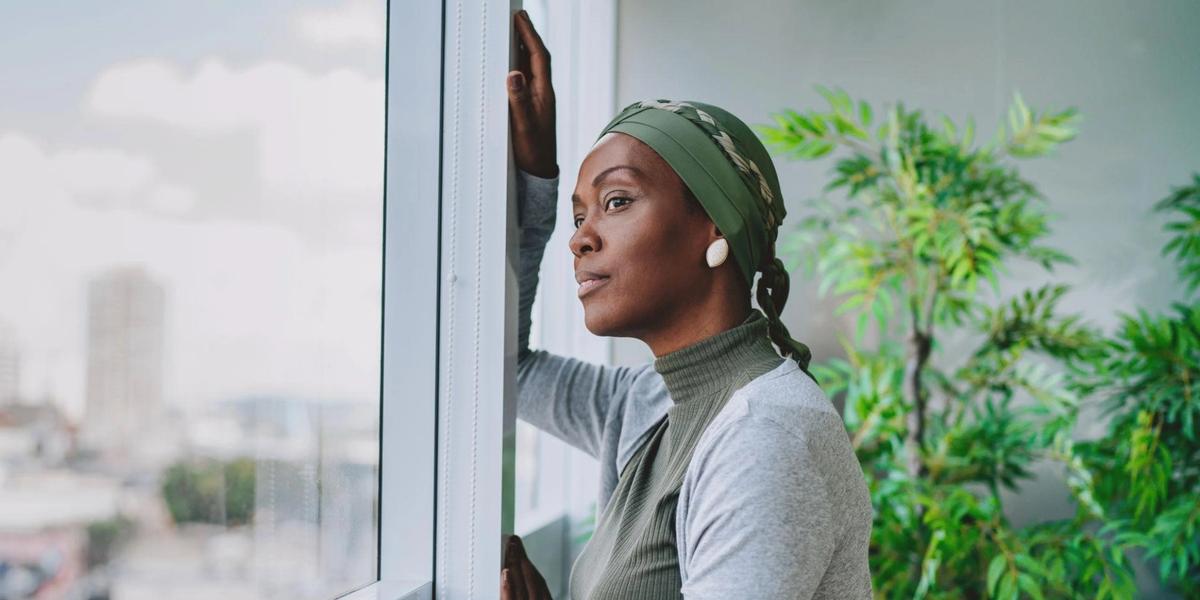
There is a particular kind of silence that arrives after the last infusion of chemotherapy or the final radiation treatment. The bell has been rung. The care team has applauded the way they do, warmly and on cue. Family members exhale, some of them for the first time in months. And then the patient walks out. They walk out of the building where they have spent months being watched over, and they go home into a life that no one quite prepared them for.
The end of treatment is often thought of as the end of the cancer story. For a great many patients, it is actually the beginning of a new chapter in it.
This is the paradox that sits at the center of survivorship, one that I have come to know well through many conversations with patients and families. In those quiet clinical moments, patients often could not name what they were experiencing, only that it did not match what everyone around them expected them to feel. Surviving cancer resolves one crisis. It tends to open several other challenges — existential, social, financial, professional, interpersonal, physical — each deserving as much clinical attention as the initial illness received, and each routinely receiving far less.
What We Actually Mean by "Survivorship"
The word gets used loosely, so it is worth being precise. By the convention that many oncology institutions follow, a person is often considered a "survivor" from the moment of diagnosis onward. However, for the purposes of this conversation, a more useful frame is narrower: the period after primary treatment ends. This includes both survivors in long-term remission as well as those on long-term maintenance therapies that they may continue on for years.
Even with this narrower scope, the number of survivors is large, and growing. Roughly 18.6 million Americans currently carry the designation of cancer survivor, a number projected to exceed 22 million within a decade. This is not a niche clinical concern. It is a public health reality that our health care system has been slow to catch up to.
The Reckoning No One Warns You About
During treatment, patients are supported by a scaffolding that many of them don't pay attention to until it is gone: scheduled appointments, infusion room routines, the care team's steady attention and availability, and a shared mission that pulls family and friends into alignment with the patient's goals. When treatment ends, that scaffolding is frequently withdrawn all at once.
What replaces it is a kind of cognitive dissonance that few survivors are prepared to name. They are expected — by their families, by their employers, and often by themselves — to feel triumphant and relieved. Instead, many feel lost, flat, quietly afraid. It is not a reaction of ingratitude. It is a response of disorientation.
I often think of the opening verse of Dante's Inferno: "Midway upon the journey of our life, I found myself within a forest dark." Dante was not describing illness, but survivors describe something remarkably similar — a life interrupted, and no clear map for what comes after.
Fear of cancer recurrence is the most common unmet psychological need in this population, and it is not a minor undercurrent. Roughly six in ten survivors report at least moderate fear of the disease returning; about one in five experience fear severe enough to be clinically significant. Beneath that fear sit questions that rarely get asked out loud in a follow-up appointment: Am I the same person I was before cancer? What did having this illness mean? What do I do with my life now?
When the Support Withdraws
The medical attention tapers first, and understandably so. But the social support tends to follow close behind, even as the underlying need for it remains high.
There is a particular phrase survivors hear that lands harder than most people intend: you beat cancer, right? Said warmly, often as encouragement, it carries an unspoken expectation — that the person who walked into treatment is the same one who is meant to walk back into their old life, their old role, their old self. Most survivors will tell you, if asked directly, that this is not quite true. And many survivors don't know how to communicate this to the people in their lives. This can be quite isolating at a time when survivors need more connection, not less.
The isolation this produces carries a double burden. Survivors often feel distant from the social circle they had before their illness, people who have, understandably, moved on with their own lives. And they lose, just as abruptly, the intimacy of the treatment-era community — the oncology team, the fellow patients in the infusion chairs — who understood something about their daily experience that almost no one else did. Peer mentorship and survivor-led support groups are one of the more effective remedies I have seen for this particular gap, and one I return to later in this piece.
The Cost That Outlives the Diagnosis
Financial hardship in cancer care is often treated as a footnote. It should not be.
Roughly three in four patients experience significant financial strain within a year of diagnosis, even when insured. (And remember that a patient in financial strain is often an entire family in financial strain.)
The national economic burden of cancer care — combining out-of-pocket costs and lost time — is estimated near twenty-one billion dollars annually. And the hardship does not reliably fade with distance from treatment: among survivors five or more years out, roughly three-quarters still report income loss, added expense, or both — a rate that in some cases rises over time rather than declines.
This matters clinically as much as financially. Financial distress correlates with anxiety, fatigue, and diminished quality of life. It is not simply a logistics problem to be handed off to a billing office. It is a mental health problem, and it deserves to be treated as one. The burden is worse in the United States than in countries with universal coverage, and worse still in lower-income countries — a systemic dimension worth naming, even in an article piece focused on the American experience.
Returning to Work, Changed
"Return to work" gets discussed as a logistical milestone. It is, in fact, its own psychosocial challenge, and often a difficult one.
Across countries in the developed world an average of 64 percent of survivors return to work (with substantial variability depending on cancer type and course of illness). Women face measurably higher rates of job loss after diagnosis, and lower rates of successful return than men — a gap driven in part by workplace discrimination and the disproportionate weight of caregiving responsibilities that often falls to them.
Much of the burden survivors face upon returning to work is invisible. Cognitive changes that patients describe as "chemo brain," persistent fatigue, and the need for accommodations long after a survivor has been declared cancer-free all compound the existential questions raised earlier. And this is of particular salience because of just how much work can be bound up with a person's sense of competence and normalcy. When that disruption goes unacknowledged, it doesn't just complicate a career. It complicates the whole project of feeling like yourself again.
What Happens to Relationships?
Cancer does not stay contained to the person diagnosed. Partners absorb caregiver fatigue. Roles reverse, sometimes permanently. Intimacy gets renegotiated, often without either person quite knowing how to start that conversation.
Sexual health, in particular, remains an underdiscussed consequence of treatment. Prostate cancer therapies, colorectal treatments, and premature menopause brought on by chemotherapy all carry lasting effects on sexual function — effects that patients are rarely offered space to discuss candidly. Meanwhile, partners and family members often navigate survivorship-adjacent distress of their own — one that can create friction or emotional distance at precisely the moment the survivor most needs steady ground. For survivors raising young children, there is an additional, quieter thread: the fear of not being there, and the difficult work of explaining illness to a child in language that reassures more than it frightens.
Body Image, Reconsidered
Body image after cancer is not a matter of vanity. It is a disruption to the core of how a person sees themselves, one that can be shaped by scars, hair loss, ostomies, amputation, weight change, and reconstructive outcomes that may not match what a patient pictured beforehand.
Among head and neck cancer survivors, roughly 89 percent report some degree of body image concern after treatment, with about 9 percent experiencing distress significant enough to require clinical attention. In breast cancer survivors, body image concerns are closely tied to both physical changes but also to treatment-induced menopause and fertility loss. And the effect is strongest among younger women.
These concerns rarely live in isolation. They reinforce the intimacy questions raised above, and the identity questions raised at the start — each one a thread in the same fabric.
Not All Stress Is the Enemy
It is worth pausing here to say something that gets lost in a piece built largely around difficulty: not all post-treatment stress is problematic or pathological.
Sometimes it's motivating. It is the sort of stress that is experienced when trying to do something well — like returning to work after a long absence, or starting to exercise again after completing treatment. This type of stress is short-term, stays within a survivor's coping capacity, and resolves. Clinically, we sometimes call this "eustress," to distinguish it from the kind of distress that becomes chronic, feels unmanageable, and begins to erode daily functioning. Naming the difference is not the same as dismissing what survivors go through. The goal of good survivorship care is to shift that ratio toward manageable resilience, not to promise the absence of all discomfort.
And it is worth saying, too, that many survivors report something on the other side of this difficulty: deepened relationships, renewed priorities, a gratitude that wasn't there before. Post-traumatic growth is real, and naming both sides of the survivorship experience keeps this from reading as unrelentingly grim. It is, more honestly, complicated — which is a truer thing to be.
What Actually Helps
Most physicians, through no fault of their own, offer minimal structured guidance for what comes after treatment ends. Survivorship care remains an underdeveloped part of the standard pathway, more addendum than architecture.
The National Cancer Institute's framework for survivorship care offers a model that more institutions are beginning to adopt, one built around surveillance, symptom management, health promotion, and coordinated care. Survivors frequently normalize or minimize what they're going through, often without realizing they're doing it. Therefore, rather than waiting for survivors to bring up concerns, clinicians need to shift from a reactive to a proactive clinical stance: to engage in structured screening for distress, and address fears of recurrence, anxiety about financial burden, and the complexities of role disruption — among other common concerns of cancer survivors.
For survivors themselves, and for the people who love them, the categories of resilience are less complicated than the medicine: tending to basic needs. Staying connected to others, even when it feels easier not to. Setting clear boundaries about who and when they spend time with. Partnering actively with the medical team rather than waiting to be told what's next. Telling their story — for example, through writing, through therapy, through peer support — rather than carrying it silently. And practicing gratitude and hope, not as a bypass around the difficulty, but alongside it.
There is a line from Henry V I return to often in this context: "Self-love, my liege, is not so vile a sin, as self-neglecting." Self-care after cancer is not indulgence. It is, in the most literal clinical sense, necessary.
The Drive Home, Reconsidered
Return for a moment to that drive home after the last cancer treatment. The silence in the car is not a sign that something has gone wrong. It is the beginning of a different chapter of the cancer experience — one that is every bit as effortful as the one that came before it, and one that deserves clinical attention, social support, and a measure of self-compassion that our systems of care have not always known how to offer.
Survivors deserve care that extends past the bell. Clinicians, employers, and the people who love survivors deserve to understand that psychosocial survivorship is not an afterthought to treatment. It is the next chapter of the journey.
✦ ✦ ✦
About the Physician
Dr. Guy Maytal, MD — Psychosocial Oncology, Forge Health · Weill Cornell Medical College Co-founder, The Survivorship Society
Prepared in partnership with Doctoloop
This article is intended for educational purposes only and does not constitute medical advice. If you or someone you know is navigating life after cancer treatment, please consult a qualified healthcare provider.