Why Teenagers Keep Fainting — and the Diagnosis Hiding in Plain Sight
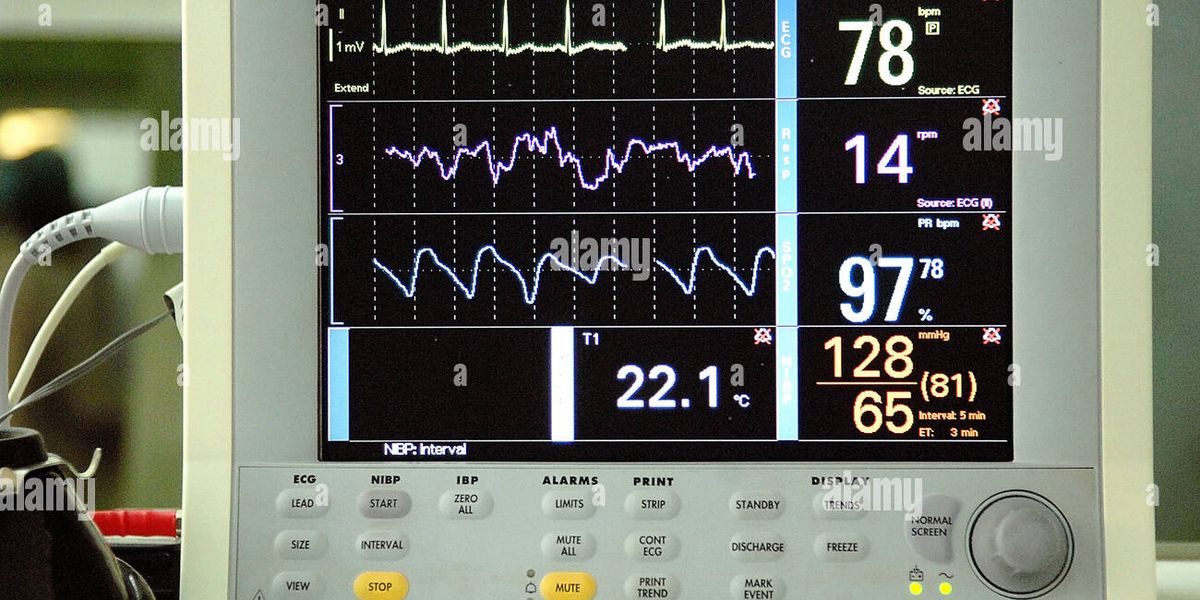
There is a particular kind of fear that settles in after a child faints for the second time. The first time, parents tell themselves it was the heat, or that she hadn't eaten enough, or that the gym was crowded. The second time, they are in the pediatrician's office within the week. The third time — if there is a third time — they are no longer asking whether something is wrong. They are asking why no one has found it yet.
In emergency rooms and pediatric practices across the country, syncope — the medical term for fainting, from the Greek for "to cut short" — accounts for roughly one to three percent of all visits. It is common enough to be routinely reassured away, and just uncommon enough that the cases hiding something serious are easy to miss.
Fainting may be benign, but the impact on their life is not.
A teenager who passes out after standing too long at a school assembly, or at the sight of a needle, is almost certainly experiencing vasovagal syncope — a brief miscommunication between the nervous system and the cardiovascular system that resolves on its own. No treatment required. No specialist needed.
But there is a subset of children — most of them adolescent girls, many of them dismissed for months or years before reaching a diagnosis — for whom fainting is not an isolated event. It is a symptom of something that has no outward appearance, that does not show up on a standard blood panel, and that is so attributed only to anxiety that the average time to correct diagnosis is still measured in years.
"The children who reach us have usually seen three or four physicians before getting here. The workup they've had is almost always incomplete — not because anyone failed them, but because POTS simply isn't in the differential unless someone specifically looks for it." — Dr. Pat Flynn, Pediatric Cardiologist, Avalon Pediatric Cardiology
The condition is called POTS — Postural Orthostatic Tachycardia Syndrome — and it is, by any measure, one of the most under-recognized disorders in adolescent medicine.
WHAT POTS ACTUALLY IS
POTS is a dysfunction of the autonomic nervous system — the part of the nervous system that regulates heart rate, blood pressure, and many other unconscious functions of the body. In a healthy person, standing up triggers a rapid, automatic adjustment: blood vessels constrict, heart rate rises briefly, and blood continues to reach the brain. In a person with POTS, that adjustment fails. Blood pools in the lower extremities. The heart compensates by racing — an increase of 30 or more beats per minute within ten minutes of standing is the diagnostic threshold — but the brain still receives less blood than it needs.
The result is a constellation of symptoms that, taken individually, sound unremarkable. Dizziness. Fatigue. Brain fog. Palpitations. Nausea. The sensation many patients describe as feeling perpetually on the verge of passing out without quite getting there.
"Once patients understand the 'why,' they are far more likely to engage in the 'how.' That's perhaps the most important part of what we do — explaining what's happening, and validating that it's real." — Dr. Pat Flynn, Pediatric Cardiologist, Avalon Pediatric Cardiology
THE PATIENT WHO DOESN'T LOOK SICK
These symptoms are much more commonly found to occur in adolescent females. They look well and even function at high levels but do not feel well and are struggling with how the symptoms impact their ability to be at their best and their quality of life. Their overall exam and labs are typically reassuring, as are their cardiac and neurologic exams.
The frustration for patients and their families lies in being told how reassuring everything looks — which actually exacerbates the challenges, because no matter the labs, they do not feel well. Many times, working with a psychologist or therapist may be recommended, which can make patients feel like they are being told "it is all in your head" — which is not the reality. A proper evaluation relies on time and attention to the nuance of everyone's unique situation, and not a specific singular test. It involves careful attention to both the patient's mind and body, which have to work together. An understanding of the interplay of mind and body is important — and realizing that treatment cannot focus on only one or the other in isolation.
THE POST-COVID DIMENSION
Before 2020, POTS was estimated to affect one to three million Americans. That number grew substantially with the emergence of long COVID, as a meaningful proportion of patients with persistent post-COVID symptoms — the fatigue, the cognitive impairment, the exercise intolerance — were found to meet the diagnostic criteria for POTS or related autonomic disorders. Those who do not reach the diagnostic criteria for POTS still benefit from similar approaches to treatment, which is focused on multidisciplinary care that works to gradually improve function across all aspects of life.
"POTS doesn't announce itself clearly and doesn't follow predictable rules. Many patients look completely fine. Their vital signs may be normal at rest. Standard lab tests come back unremarkable. And yet, they feel awful. Every patient deserves to be heard, to be believed, to have a clear, thoughtful plan." — Dr. Pat Flynn, Avalon Pediatric Cardiology
WHAT HAPPENS AFTER DIAGNOSIS
In many conditions, there is the aim to look for a cure, but often the reality is more about management. With thoughtful and individualized treatment, symptoms can improve in meaningful ways that actually allow patients to feel more empowered about their situation.
The foundations of care are less dramatic than families sometimes expect. Increased fluid and sodium intake addresses the blood volume deficit underlying many POTS symptoms. Compression garments reduce pooling. And structured physical reconditioning — beginning with recumbent exercise and progressing carefully to upright activity — has strong evidence behind it.
"The instinct of a child who feels worse upon standing is to stand less. That's completely understandable. But immobility and deconditioning worsens POTS significantly. One of the most important things we do is help families understand that carefully structured movement is medicine — and that the goal is always to promote healthy movement, not to protect." — Ryan White, DPT, Sports Rehabilitation Physical Therapist, RAW Physio
Children with POTS often become trapped in a cycle where dizziness leads to less movement, and less movement leads to more symptoms. One of the primary goals of physical therapy is to restore healthy spinal and body movement, helping the nervous system feel safe and capable again — a core principle of Ryan White's approach at RAW Physio.
Medication is sometimes added to the regimen — beta-blockers, midodrine, fludrocortisone — depending on the patient, the severity of symptoms, and the specific subtype involved. But the physical reconditioning component is considered foundational by most specialists, and it requires the involvement of a physical therapist experienced with autonomic dysfunction.
THE QUESTION WORTH ASKING
For every child who reaches a POTS diagnosis, there are others who have not. Who are in a pediatrician's office right now, describing dizziness and fatigue and palpitations, and leaving with a recommendation to drink more water.
The gap is not primarily a gap in medical knowledge. The diagnostic criteria for POTS have been established for decades. The active stand test takes ten minutes. The treatment protocols are accessible. The gap is a gap in recognition — in the clinical reflex to consider POTS when the right constellation of symptoms presents.
The families who eventually reach the right specialists describe, with remarkable consistency, the same experience: a period of confusion, followed by a diagnosis that reframed everything that had come before. Not a revelation. A correction.
"I have not met a family who regretted asking the question. I have met many who wished they'd asked it sooner." — Dr. Pat Flynn
✦ ✦ ✦
About the Speakers
Dr. Pat Flynn, MD Pediatric Cardiologist · Avalon Pediatric Cardiology · New York City
Dr. Jamie Lee Palaganas, MD FAAN Child Neurologist · Pediatric Neurology of NYC · TriBeCa
Ryan White, DPT Sports Rehabilitation Physical Therapist · RAW Physio · New York City
This article is published in connection with the Doctoloop webinar "When Kids Faint — Syncope & POTS in Children and Adolescents", featuring Dr. Pat Flynn, Dr. Jamie Lee Palaganas, and Ryan White DPT. Wednesday June 10, 12:00 PM ET.
This article is intended for educational purposes only and does not constitute medical advice. If you have concerns about your child's health, please consult a qualified healthcare provider.